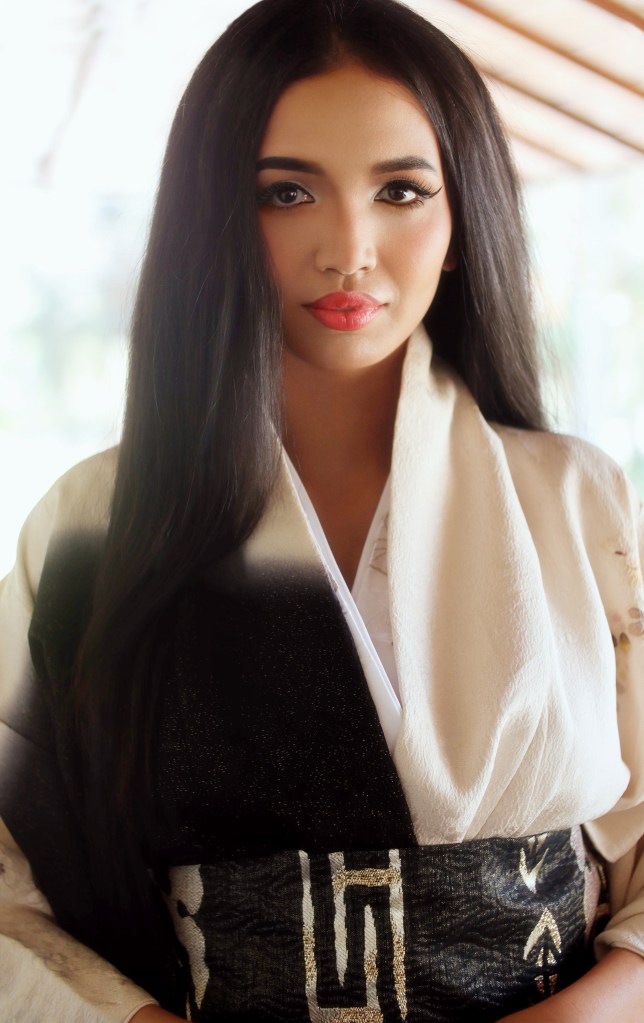
The Modern Geisha: Kristina Menissov Explores Feminine Strength in New Single
Kristina Menissov is no stranger to transformation. From her roots in classical opera to
her current status as a captivating pop artist, she has consistently used music as a
vehicle for self-discovery and honest storytelling. Her latest single, “Geisha,” represents
a profound new chapter, delving into the spiritual essence of feminine energy. In a
candid interview, Menissov reveals how she moved past perfectionism and embraced
vulnerability, finding her most authentic voice yet. The song, which she describes as
both a “mirror and a medicine,” is a powerful ode to softness as strength and the inner
balance we all seek.
1. What first inspired you to pursue a career in music?
Music was always my safe place. Even before I understood what I was feeling, I could feel it through sound. I started with opera and classical music when I was very young… it gave me a sense of structure and discipline, but what truly inspired me to pursue music as a career was when I realized I could use it to tell my story. Not someone else’s, not something perfect—but mine.
2. Can you tell us about a pivotal moment in your life when you realized music was your calling?
There was a moment when I had stepped away from music entirely because of the comments and guidance that I thought was criticism and internalized it during my classical training. I had shut down emotionally and creatively. During quarantine in 2020 we all had too much time on our hands and that’s when I was actually missing the LA pace and wrote my first single in English “Taking Over LA”. That moment reminded me that music is about being alive. That’s when I knew I had to come back.
3. Who are your biggest musical influences, and how have they shaped your sound?
I grew up loving Sade, Whitney Houston, Madonna, and Maria Callas. I know that sounds like a wild mix—but they each gave me something. Sade taught me intimacy through sound. Whitney was raw power and soul. Madonna gave me permission to reinvent and express freely. And Callas was discipline, elegance, and heart. I think my music sits at the intersection of classical training, deep emotion, and modern storytelling.
4. How has your music evolved from when you first started to where you are now?
In the beginning, I was more focused on technique and presentation—making sure everything was “right.” Now, I’m focused on truth. I’ve let go of needing to impress and instead focus on what I need to express. My newer work is bolder, more vulnerable, and less filtered. I’ve also started blending spoken word, different textures, and storytelling in a more intentional way.
5. Can you walk us through your creative process when writing a new song?
It usually starts with a feeling in my body—a sentence, a line, an image, or a vibration that won’t let me go. I sit with that energy and start building the sound around it. Then with all those ideas I usually call my incredible co-writer and producer Andrew Lane. We meet at the studio and make the hits happen. Not every song of course sees the light right away, I love to keep sending it to my friends and keep tweaking it till perfection until I see “the sign” or someone start pushing me to let go and release and setting deadlines like Universal Music Group.
6. Do you start with lyrics, melodies, or a concept when creating a new track?
Most of the time, it’s a concept or a deep emotional truth. Like with “Geisha,” it started with the image and the feeling of what that archetype meant to me—and from there the lyrics and melodies started pouring out. Sometimes it goes the opposite way, I hear the beat and melody shows up like a surprise and leads everything else.
7. How do you handle creative blocks or moments when inspiration is hard to find?
I stop forcing. I get out of the studio, go outside, move my body, or do something that connects me back to my body. I’ve learned that inspiration isn’t something you chase… it’s something you allow. When I’m blocked, it usually means I’m not feeling connected to myself enough to be honest, so I focus on calming my nervous system and trusting that the creativity will return when it’s time.
8. What do you want listeners to feel or take away from your music?
I want people to feel seen. Like someone out there gets it. Whether it’s a heartbreak, a glow-up, a spiritual awakening, or a messy middle! I want them to feel permission to be human. My goal is to make music that feels like both a mirror and a medicine.
9. What’s the story behind your latest single “Geisha”?
“Geisha” is about feminine energy—not in the way society defines it, but in its deeper, spiritual form. It’s about softness as strength, and the inner balance between our masculine and feminine sides. I was inspired by the grace, control, and emotional intelligence of the Geisha archetype, and how that mirrors what many of us are searching for in ourselves: peace, presence, magnetism. The song is personal—it reflects a lot of my inner work, healing, and reclaiming power through acceptance.
10. Do you have any memorable moments from working with other artists or producers?
Working with Andrew Lane was incredible. He’s not just a producer—he’s a translator of emotion into sound. There was a moment when we were recording a part of “Geisha” and I got emotional mid-take. Instead of stopping, he told me to stay in it and just feel. That moment became one of the most honest parts of the song.
11. If you could collaborate with any artist, past or present, who would it be and why?
Madonna. She’s fearless, provocative, emotionally complex, and always evolving. She understands both the performance and the why behind it. I’d love to explore something deep, spiritual, and sensual with her—a kind of East-meets-West fusion.
12. What has been your most memorable performance or tour experience so far?
My first solo concert at The Mint in Los Angeles. The energy was electric even though I got sick prior my concert and my voice only recovered 60% it was the most real. It felt like I was singing directly from my heart into every person in the room. That night I saw how powerful vulnerability can be.
13. How do you connect with your audience during live shows or through your music?
I breathe with them. I try to drop into my body and be completely present. I talk to them like I would to a friend. I don’t try to “perform” in the traditional sense—I just want to feel with them. That’s when the magic happens.

14. What do you think is the most rewarding aspect of being a music artist?
Turning pain into beauty. Taking something I once struggled with and turning it into a melody that helps someone else feel less alone. Music is alchemy, and I feel honored to be part of that process.
15. Has fan feedback ever influenced the direction of your music?
Yes, absolutely. There are messages I’ve received after releasing songs that made me realize how much we’re all connected. Sometimes I’ll read a comment and think, “Wow, they felt exactly what I was feeling.” It pushes me to keep going deeper and be even more honest. Now with the negative feedback I always listen (sometimes maybe too much) and try to take out from even some harsh comments something constructive and implement in my art.
16. What are some of the biggest challenges you’ve faced in your music career, and how did you overcome them?
Letting go of perfection. I spent years thinking I had to sound a certain way or look a certain way to be accepted in music industry. The real work was learning to trust my instincts, allow myself to make mistakes, and find beauty in the rawness. Also, navigating the business side has had its challenges, but I’ve built a team that believes in me, and that changed everything, so now when I feel like I am not enough, I remind myself how many people believe in me.
17. How do you balance staying true to your artistry while adapting to trends in the music industry?
I ask myself: “Is this coming from fear or from truth?” Trends can be inspiring, but if I’m bending to them just to fit in, I know I’m off course. I often hear that I need to find my genre and stick to it, but I have not mastered my songwriting to the point to dictate what I need to stick to, I write how I feel… I think of my sound as a conversation with the world.
18. Is there a particular song or project that pushed you outside your comfort zone creatively?
“Geisha” definitely pushed me to be emotionally naked in a way I hadn’t been before. I was so conscious of how the world will react of me diving into the world of Geishas. I learned so much about them and that the cliché perspective we have about them is not that accurate. And by taking this path and not just seeking the song I set an intention by releasing this song myself I will release of everything I’d been processing internally for years.
19. What message or legacy do you want to leave behind with your music?
That softness is strength. That you don’t have to harden to protect yourself. That healing is real. That your story matters. I want “Geisha” to spike interest for the culture we can learn so much about and heal our femininity while doing so.
20. Where do you see yourself and your music career in the next 5 years?
I see myself touring internationally, collaborating with artists I admire, building a creative sanctuary for women to find their voice. I want to be known not just for what I sing, but for what I stand for.
21. How do you stay motivated and passionate about creating new music?
By living. Every time I fall, love, grow, or mess up—I write. Life gives me the material, and music gives me the space to process it. I don’t wait for motivation and let it find me
 CYNX MAGAZINE